Assessment
Each bear is examined by hand and under good light. We note original materials, era markers, structural weaknesses, eye and nose condition, and any maker's marks. A short written record stays with the bear's file.
Gentle cleaning
We dry-brush, surface-clean, and where appropriate, hand-wash with conservation-friendly soaps. Mohair is allowed to air-dry naturally over several days — never machine-tumbled.
Repair, not replace
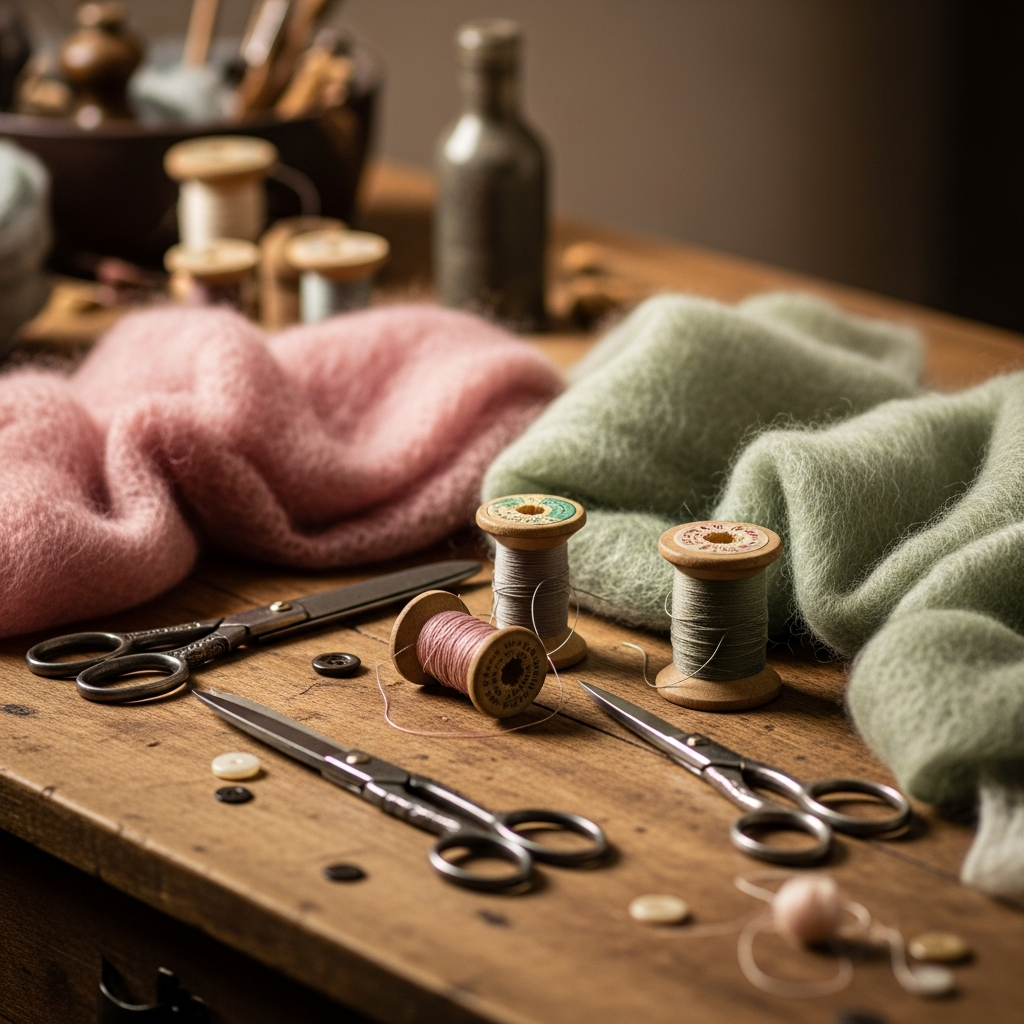
Pads, paws and seams are stabilised with period-appropriate felts and cotton threads. Original eyes, growlers, and labels are preserved wherever possible. We choose conservation over a "like-new" finish.

A few notes for new caregivers
- · Keep your bear out of direct sun and dry, well-ventilated rooms.
- · Dust gently with a soft brush every few months.
- · Avoid water near antique mohair — surface-clean only with a barely-damp cloth.
- · If something tears or comes loose, send us a note and we'll guide you through next steps.